Let’s Make Local Government Boring.
So when you need government, it works and your calls are answered, processes are clear, and help arrives when you need it.
Permits get processed. Streets and parks get maintained. Calls and emails get answered. Agencies coordinate. When something starts going wrong, government steps in before it becomes a bigger problem.
That's what boring looks like and that's what Portland needs.
I've spent this campaign treating it like one extended interview by showing up across Portland, listening to residents and businesses, learning how the city works, and building a record you can judge for yourself.
The Working Interview
I've treated this campaign as one long working interview.
For nine months, I've shown up across Portland listening, learning, getting involved, and finding ways to help. Below is a representative record of the neighborhood and business associations, community organizations, public meetings, town halls, volunteer projects, tours, events, and conversations I've participated in. It isn't everything. It doesn't include repeat visits, many one-on-one conversations, numerous City Hall and Council visits, or work that doesn't fit neatly into a list.
I'm not asking you to take my word for what I might do in office. I'm building a record you can judge for yourself.
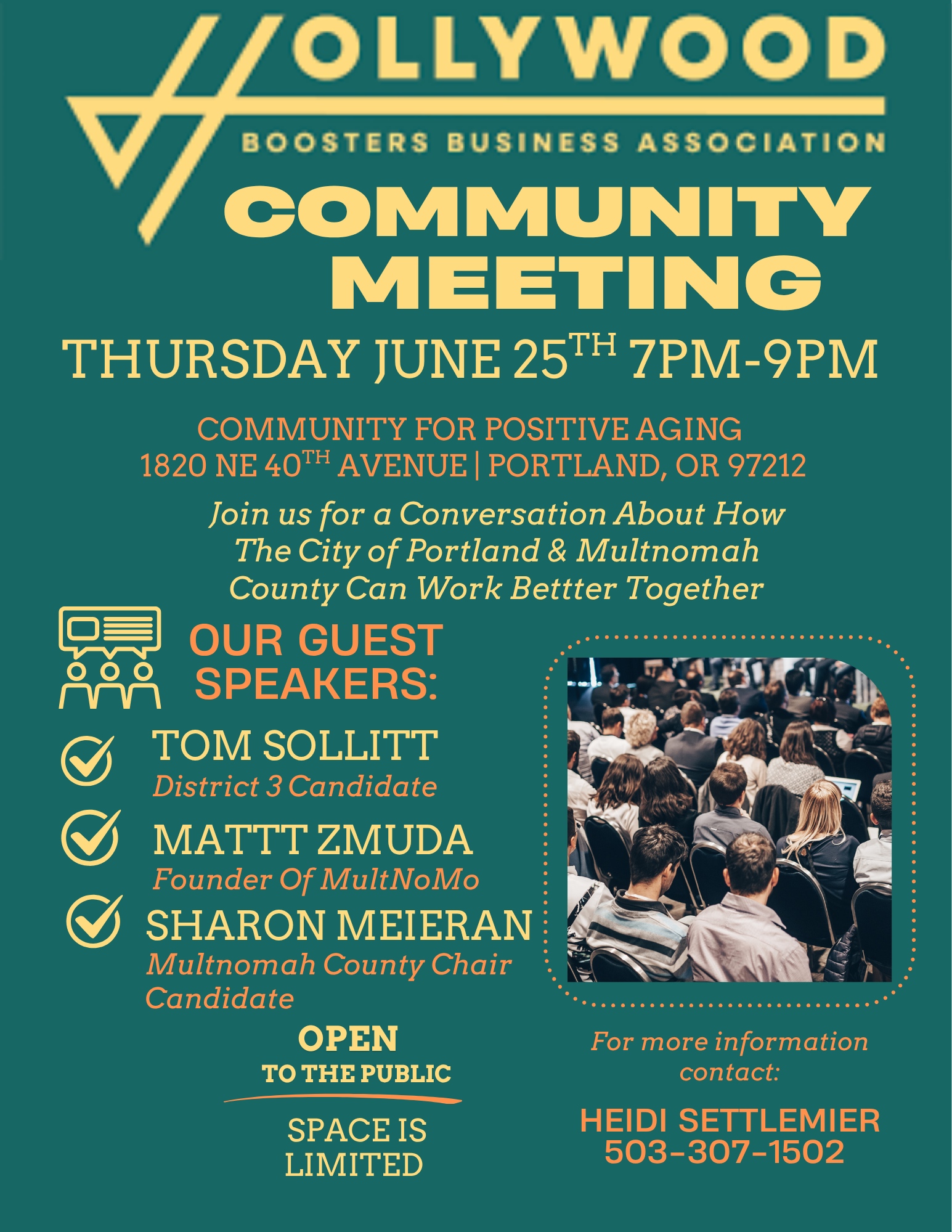
SE Uplift Board Meeting(s), Creston-Kenilworth Neighborhood Association, Brooklyn Action Corps, Mt. Scott-Arletta Neighborhood Association, Kerns Neighborhood Association, Brentwood Darlington Neighborhood Association Meeting, Laurelhurst Neighborhood Assocation, Hosford-Abernethy Neighborhood Association, Rose City Park Neighborhood Association, Richmond Neighborhood Association, Montavilla Neighborhood Association, Sunnyside Neighborhood Association, Buckman Neighborhood Association, North Tabor Neighborhood Association, Tabor Neighborhood Association, South Tabor Neighborhood Association, Woodstock Neighborhood Association, Sumner Association of Neighbors, The Old Town Community Association, Piedmont Neighborhood Association, Central Eastside Industrial Council, Division/Clinton Street Business Association, Hawthorne Business Association, Kernside Business Association, Hollywood Boosters Business Association, Foster-Powell Business Associaiton, Belmont Business Association, Brooklyn Business Association, Montavilla Business Association, East Portland Chamber of Commerce, Woodstock Business Association, Better Portland Thinking Local Series: Buckman Coffee Factory w/ Mayor Keith Wilson, 38th Annual OAME Trade Show & Luncheon
Norse Hall Visit (Norwegian Constitution Day), Port of Portland Visit, DSA Primary Results Watch Party, School Bike Bus Abernethy Elementary, Eat & Greet (Cultivate Initiatives), AAPI Night OMSI, Rose Festival Fireworks, Portland State University Farmers Market, Block Party @360grindz, Void x Let’s be Friends Summer Block Party, Sunnyside x Richmond Potluck, Brentwood Darlington Community Dinner, Cleveland High School (Groundbreaking), Community Warehouse, The Shack, City Council Watch Party at NextUp, Official Ribbon-Cutting Ceremony, Pearl Business Association, Quarterly Member Event: Summer Celebration, Save Lloyd Ice Gala?, East Portland Tool Library, Electrify Portland, Sunday Parkways, Hey Doc Anniversary, 2026 Milk Carton Boat Race, CEI Hub Tour, East Precent Every Tuesday, Fam Jam Dream Plaza, Social Beer: Mid-2026 Gathering (Tech Meet), FinAbility #SpeakOut, BikeLoud (New Greenway Ride)
Indivisible Group Candidate Panel, District 3 & 4 Candidate Meet & Greet, Happy Hour with Candidates, Burnside Turns 100, Jefferson High School Modernization Groundbreaking, Tech Meetup, Portland Fire Game, Garage Coffee, Abernethy Elementary School Mural, Parkrose High School Mural, Guns to Gardens, Alano Club, Division Midway Alliance Office Visit, NW Fresh Meetup, People’s Depot Conversation, Portland Rescue Mission, Historic Parkrose
TriMet Cuts Open House, Transportation Funding Open House (D1, D2, D3, D4), East County Resource Fair, Dawson Park Resource Fair, City Club Councilor Town Halls (D1, D2, D3, D4), PCC Strike, Joint Budgeting Listening Session (Councilors Smith and Pirtle-Guiney), Joint Town Hall (Councilors Clark and Zimmerman, and City Administrator Raymond Lee), Parkrose Forward, Coffee Break Series: Councilor Koyama Lane & Councilor Novick, Budget Talk with Elana Pirtle-Guiney), TriMet Board of Directors Meeting, Portland Issues: The City of Portland & Climate Resiliency, PCC Faculty March, D3 Budget 4/26), Councilor Kanal (Right to Know Who's Policing You), Multnomah County Proclamation Day, City Council Budget Listening Sessions (D1, D2, D3, D4), Office of Small Business (D4, D1), State of the County, State of the City, PCC Board Meeting, Public Forum, Regular Business Meeting and Briefing, Councilor Morillo Constiuent Coffee, Constiuent Coffee Dunphy, Representative Thuy Tran, A Conversation with Raymond Lee (City Club), GEAC: D1 City Councilors, D2 Moda Pop-up, Moda D3 Pop-Up, Portland Community College Board Of Directors,
Councilor Loretta Smith (Coffee with a Cop), Community Conversation with Councilor Elana Pirtle-Guiney, Councilor Zimmerman Coffee Hour, Portland Free Store Project, Feed the Mass, Community Happy Hour with Steve Novick, Past Lives, Northeast Coalition of Neighborhoods, Creative Afternoons at NACF, fromer Housing Bureau Employee, We are Better Portland, Silicon Forest Tech Summit, CSA Share, Groundscore Association, Reimagine the River Conference, Nourish Oregon, Gray Panthers, Community Resource Fair (Angelita), Governors Equity Roundtable, Save Lloyd, Refugee & Immigrant Girls World Cup, Thrive East PDX, CEI Hub Risks Press Release, Oregon Governors Marketplace, Textile Hive (Caleb), Portland Neighbors Welcome, Spring Health & Wellness Fair (Multnomah County), Cully 5 Corners Visioning Meeting & Survey, OMSI, CTOC (Clinton Triangle Oversight Committee), Urban League (41st Annual Career Connections Job Fair), The Offbeat (City Club 4/16), PIRC, Free Compost Day, Health & Public Safety, Oregon Active Transportation Summit (PechaKucha), Last Look at Cleveland High School, Tough Shit (April), OSU Food Innovation Center Visit, Snowcap Visit, Making Earth Cool, Community in Action: Our City, Our Priorities (Portland for All), Barbies Village Visit, Nonprofit Connect 2026, Fling & Resource Fair, Envisioning A Reconnected Albina: Continuing The Conversation, The Future of Ross Island, Union Rally at City Hall (May 3rd), River Hugger, Alley Oop the Vote, PCC Sonic Arts Capstone Showcase, Stone Soup Visit, Just Compassion, Renaissance Faire Rally, Bloom Oregon Food Bank, Veganizer Asian Market, The Courts 2.0 Groundbreaking, Telemundo Portland Fiesta Fútbol, presented by Unitus, Kernside Street Fair, 54th Annual Juneteenth Oregon, UO Concordia Campus Free Bricks, A Beat Happening (big gathering), Tough Shit (July), MultDems Annual Summer Picnic, Bird Alliance 350 PDX, Center for Positive Aging Visit, HAND Block Party, Futsal Tournament, Portland City Council Watch Party NextUp, Table TalkA Gresham Community Conversationon Homelessness & Furniture Poverty, Sumner Ice Cream Social, Food Court 5000, Cats of Sunnyside, Greater Brooklyn BBQ, Moda Center Talks, Roseway Picnic, Planned Parenthood Trivia, ESD Meetup, Sellwood Street Fair, Obon Fest, Energy Friendly Homes Tours (PCEF project, building emissions reductions), Friday Night Out, Friday Food Carts GEAC, Roseway Concert in the Park, CEI Hub Tour by Water,
Depave, Mt. Scott-Arletta Art Installation, Swan Island Beach Bash (Human Access Project and Willamette Riverkeeper), Painting Rainbow Road, Brooklyn Community Garden, Dear Portland Project (Take Down), Sunshine Division, SAN Litter Patrol & Rogue Gardening, 82nd Avenue of Roses Parade, Junior Rose Parade, Final Lloyd Center Ice Skating Show 5/31, Brooklyn Bridge Naming, Oregon Food Bank Visit, Talk a Mile, Neighbors Welcome, BDNA Artisan Market, No Kings Laurelhurst, Bricks need Mortar, Montavilla Street Plaza, Lloyd Live Duckworth Dock, Talk a Mile July 4th, Potluck in the Park, Rental Assistance Employee, Do Good Multnomah, the Filipino Bayanihan Center, Bike Portland, Art Design Xchange, Kinship, Train Snap, City Club, Future Portland, Frog Ferry,
What I've Done
Helping Residents Be Heard
I helped earn the trust of a tenants union facing a 2.5-year elevator outage that was creating serious accessibility and quality-of-life challenges for residents. With potential TriMet service reductions adding another concern, I helped connect residents with the Mayor's Office through relationship building and advocacy.
Protecting Community Vision for Lloyd Center
I stood alongside the Save Lloyd community and testified before Portland City Council in support of a climate-conscious, community-centered vision for Lloyd Center's future.
Our proposal emphasized adaptive reuse and preservation where feasible while creating opportunities for future investment and regional collaboration.
The experience reinforced what I believe public service requires: representatives should stand alongside Portlanders who organize and advocate for their communities, elevate their voices, and advance practical alternatives, even when those alternatives may not prevail.
Currently, there is no redevelopment plan other than demolishing the existing structure, our Mayor is now on record saying as much and that it will be 30 acres of dirt. A blighted section that large in the Lloyd District is likely going to become a big barrier towards revitalizing that part of Portland.
Improving Government Coordination
I participated in conversations surrounding The People's Depot relocation and helped amplify concerns about a process requiring community organizations to navigate multiple separate agreements with different parties.
The experience reinforced my belief that government should bring stakeholders together and coordinate its work rather than requiring communities to manage disconnected systems themselves.
It was also a great opportunity to learn more about Good Neighbor Agreements, and the process that different parties engage in when adding something of substantial to a neighborhood.
Centering Community Voices
I've been working with community members regarding the proposed renaming of César Chávez Boulevard to ensure the voices of those most affected are included in the conversation.
I also distributed a survey to more than 600 residents whose addresses would ultimately be affected and have explored alternatives such as street co-naming that could honor important figures while reducing unnecessary burdens on residents and businesses.
These experiences have shaped how I approach public service: listen first, bring people together, and build solutions that work for the communities involved.
How I'll Govern
Government That Works Together
Portlanders experience one Portland, not separate agencies and jurisdictions.
The City of Portland, Multnomah County, Metro, TriMet, schools, state agencies, nonprofits, and community organizations all play a role in our city's future. When these systems operate separately, people fall through the cracks. When they work together, we can deliver better outcomes.
As a Councilor, I will focus on bringing partners together, breaking down silos, aligning priorities, and making sure public investments create meaningful results.
No More Starting Over
People experiencing homelessness, behavioral health challenges, addiction, poverty, or instability often have to navigate a maze of disconnected systems.
Government should make that process easier, not harder.
We need better coordination between healthcare providers, service organizations, housing providers, and government agencies so people can access the right support at the right time.
Better coordination means:
Fewer people falling through the cracks
Less duplication of services
Faster responses during crises
Greater accountability for what actually works
Government should help people navigate systems instead of requiring people to navigate government.
Community Voices in Government
Good government starts by listening.
Residents, businesses, and community organizations should have meaningful opportunities to shape decisions before policies are finalized, not after.
The best solutions often come from the people closest to the challenges. Government's job is to listen, collaborate, and help turn those ideas into action.
That means strengthening civic engagement, supporting neighborhood partnerships, creating better feedback loops, and making government easier to access.
Strengthening Civic Life
Strong neighborhoods are the foundation of a resilient city.
After spending months attending neighborhood associations, business associations, and community events, one thing has become clear: Portland needs stronger connections between residents and the decisions that affect their lives.
We should invest in the systems that make civic participation possible, including the Office of Civic Life and partnerships with neighborhood and business organizations.
Community groups should spend more time building relationships and solving problems, and less time competing for limited resources.
Supporting neighborhood events, local partnerships, and community-led projects helps create a Portland where people feel connected, informed, and invested in their future.
Trust, Accountability, and Public Service
Representation is not authority over people; it is responsibility to work with them.
Public service is not about defending systems because they exist. It is about asking whether they still serve the public and improving them when they do not.
Government should be functional, transparent, accountable, and responsive. Major decisions should be guided by clear goals, measurable outcomes, and public trust.
A City Where People Can Thrive
As the cost of living continues to rise, Portland needs practical solutions that help people afford to live, work, and build their futures.
That means supporting housing stability, strengthening small businesses, investing in neighborhoods, improving infrastructure, and creating opportunities for people to build a life here.
A strong local economy depends on the people who choose to stay, build, create, and invest here. Government should support that resilience by making it easier and not harder for people and businesses to succeed.
My Values
As someone who was displaced through international adoption from South Korea to Oregon, I know how profoundly agency, belonging, and opportunity shape a person's life. Those experiences strengthened my commitment to ensuring everyone has the opportunity to determine their own future, build a stable life, and fully participate in their community.
I believe every person deserves dignity, respect, and equal protection under the law. I will work to protect the rights of immigrants, LGBTQ+ people, including transgender people, and every community facing discrimination or barriers to opportunity.
I believe public service is about solving problems, listening to the people most affected, and bringing diverse perspectives together to find practical solutions.
My Commitment
I believe the best government is often invisible because when systems work, people are free to focus on their families, their work, their communities, and their futures.
I'm running to build a Portland where government listens, communities are empowered, and public institutions deliver results.
A Portland where residents don't have to fight the system to get things done.
My Priorities
These proposals are a starting point. I welcome good-faith feedback, new information, and better ideas. That is how policy improves.
Interviews & Events
I am thankful to have had the opportunity to be a guest on several podcasts for interviews. They were all relatively early in my campaign and an interesting time capsule of my thoughts, positions, and ideas that have become more informed, developed, and changed over the course of the year.
We officially qualified for the Small Donor Elections Matching Program!
This means that donations of $5-$25 will now be matched 10-1, which presents a big opportunity for a grassroots campaign like this to be competitive.
This only happened thanks to all of you who contributed and supported, with gratitude!
Introduction
Branding, marketing, and events specialist. Community builder. Candidate for Portland City Council District 3.
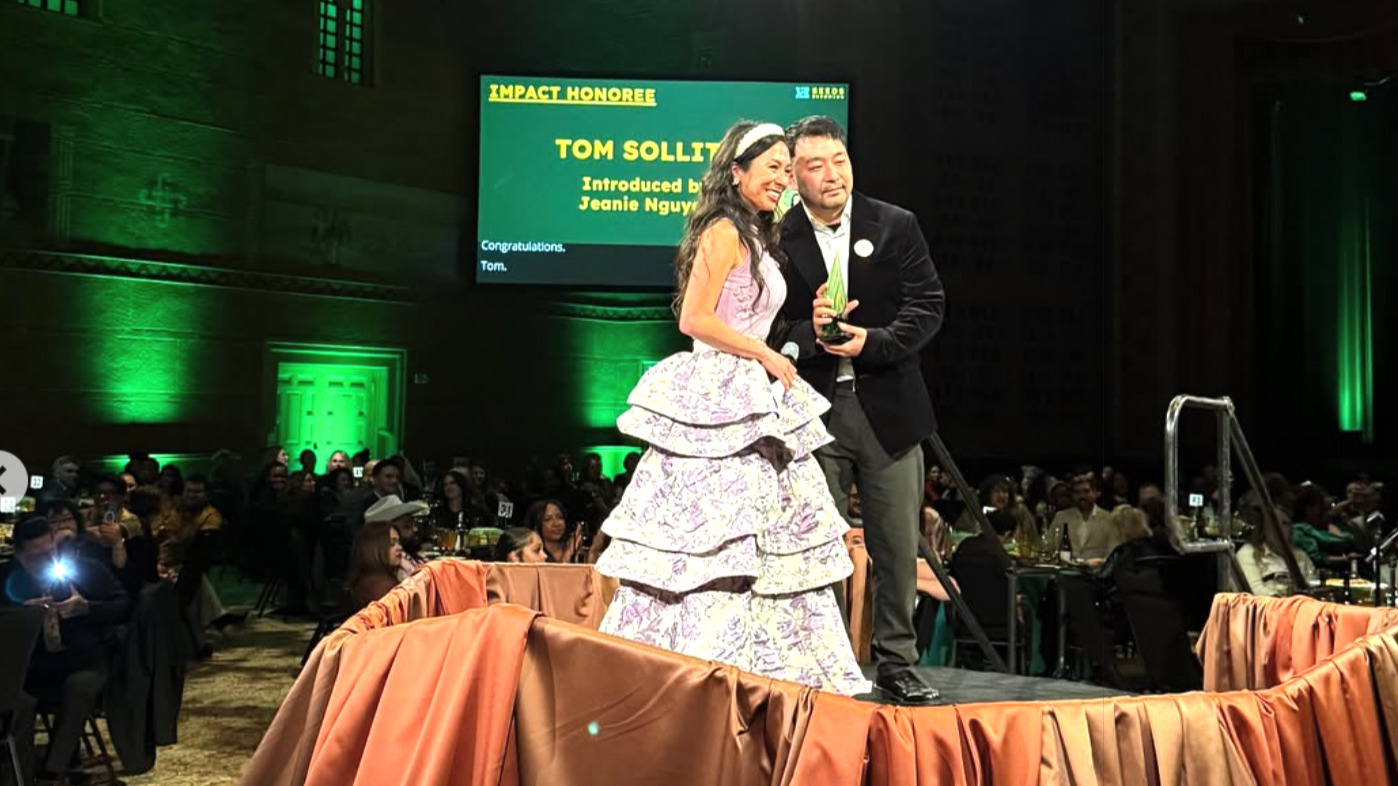
I've worked in consulting and in-house roles with nonprofits, businesses, and entrepreneurs in the U.S. and South Korea. I hold a BFA in Communications from Oregon State University and received the 2025 Taste for Equity Innovation Award for community-based work, including producing the Legendary Makers Market.